Knowledge Discovery with Knowledge Graphs: From Structual Embeddings to Generative Reasoning (KD-KG)

Lecture-Style Tutorial
32nd SIGKDD Conference on Knowledge Discovery and Data Mining (KDD 2026)
Room , International Convention Center Jeju (ICC Jeju), Jeju, Korea
August 09:00AM-12:00PM

Abstract

Knowledge graphs provide a structured modeling of human knowledge, which is essential to many modern knowledge discovery systems. Knowledge graph embedding and knowledge graph representation learning techniques convert entities and relations into feature vectors, thereby facilitating their effective integration into contemporary data mining and machine learning applications. Along with these structural embedding approaches, recent studies on knowledge graphs also explore their applications with large language models, such as improving the Retrieval-Augmented Generation (RAG) based on the graph-structured data, referred to as GraphRAG. This tutorial provides a review of seminal works in knowledge graph representation learning, including knowledge graph embedding with multimodal data, inductive reasoning on knowledge graphs, knowledge graph foundation models, and representation learning on hyper-relational knowledge graphs. Furthermore, the tutorial also investigates various ways to use knowledge graphs with large language models. This Lecture-Style Tutorial consists of six lectures, including some demonstrations of representative knowledge graph representation learning models.

Presenters

Main Tutor
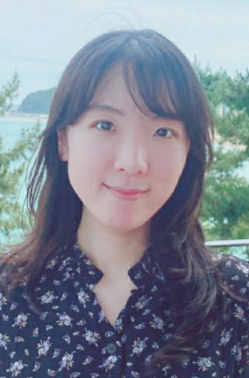
Joyce Jiyoung Whang

Joyce Jiyoung Whang

Joyce Jiyoung Whang is an associate professor at the School of Computing at KAIST, where she has led the Big Data Intelligence Lab since July 2020. Before joining KAIST, she was an assistant professor of Computer Science and Engineering at Sungkyunkwan University (SKKU) from March 2016 to June 2020. She received her Ph.D. degree in Computer Science from the University of Texas at Austin in December 2015 under the supervision of Professor Inderjit Dhillon. She serves as Area Chair for ICML, NeurIPS, and ICLR. She is an associate editor for ACM Transactions on Knowledge Discovery from Data (TKDD) and a workshop chair for KDD 2026.

Assistent Tutors

Jaejun Lee

Jaejun Lee

Jaejun Lee is a last-year Ph.D. student at the School of Computing at KAIST, where he is a member of the Big Data Intelligence Lab advised by Professor Joyce Jiyoung Whang. He serves as a reviewer for major machine learning and data mining conferences, including ICML, KDD, ARR, and NeurIPS. His research expertise lies in knowledge graph representation learning, graph neural networks, multimodal knowledge graphs, and their theoretical foundations. He contributed to the KeyKGRL tutorial held at ISWC 2025, where he led the hands-on practice sessions. E-mail address is jjlee98@kaist.ac.kr.
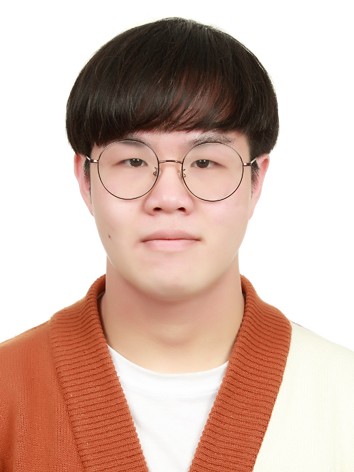
Chanyoung Chung

Chanyoung Chung

Chanyoung Chung is a last-year Ph.D. student in the School of Computing at KAIST and a member of the Big Data Intelligence Lab led by Professor Joyce Jiyoung Whang. His research interests primarily include graph machine learning, graph neural networks, and knowledge graphs. He has published papers in top-tier conferences, including AAAI, KDD, and SIGIR, and has served as a reviewer for various conferences and journals, including AAAI, ARR, SIGIR, TKDE, TNNLS, and TPAMI. E-mail address is chanyoung.chung@kaist.ac.kr.

Schedule

Tutorial Time Presenter Program
9:00-9:30 Joyce Jiyoung Whang [Lecture 1] Introduction to Knowledge Graphs and their Real-World Applications[PDF]
9:30-10:00 Joyce Jiyoung Whang [Lecture 2] Knowledge Graph Embedding with Multimodal Data [PDF]
10:00-10:30 Joyce Jiyoung Whang [Lecture 3] Inductive Reasoning on Knowledge Graphs [PDF]
10:30-11:00 Joyce Jiyoung Whang [Lecture 4] Hands-on Practice of Inductive KGRL [PDF]
11:00-11:30 Jaejun Lee [Lecture 5] Representation Learning on Hyper-relational Knowledge Graphs [PDF]
11:30-12:00 Chanyoung Chung [Lecture 6] Knowledge Graphs with Large Language Models & GraphRAG [PDF]

Program

Lecture 1: Introduction to Knowledge Graphs and their Real-World Applications

A gentle introduction to knowledge graphs (KGs) is presented with their real-world applications, such as Google’s KG-powered search, Palantir’s ontology-powered AI techniques, Amazon’s Neptune service, and Meta’s Graph API. Also, the concept of graph embedding and classical knowledge graph embedding models, including TransE, RotatE, DistMult, and ANALOGY, are reviewed.

Lecture 2: Knowledge Graph Embedding with Multimodal Data

We discuss knowledge graph embedding, in which entities or relations are accompanied by their textual descriptions, numeric data, and visual features. Multimodal KG embedding methods integrate various visual, textual, or numerical data into KG embedding vectors, enabling them to encode not only the structural information of KGs but also additional multimodal features. Methods including IKRL, LiteralE, RSME, MKGformer, OTKGE, MoSE, IMF, VISTA, MoMoK, are discussed.

Lecture 3: Inductive Reasoning on Knowledge Graphs

Inductive Knowledge Graph Representation Learning (KGRL) methods allow a model to compute representations for a new inference KG that differs from the training KG, enabling the prediction of missing triplets in the inference KG, which may include new entities and relations appearing at inference time. This is distinguished from a transductive learning setting, where the entity and relation representation vectors are learned based on a fixed KG, and only new combinations of them are considered for KG completion at inference time. This lecture discusses seminal works on inductive KGRL methods, including NeuralLP, DRUM, GraIL, NBFNet, RED-GNN, RMPI, InGram, AdaProp, and KnowFormer.

Lecture 4: Foundation Models for Knowledge Graph Reasoning

The inductive learning paradigm on KGRL extends to foundation models. While inductive KGRL methods and KG foundation models share similar objectives in generalizing their abilities to unseen KGs, KG foundation models further extend these capabilities to arbitrary KGs. KG foundation models are pre-trained on diverse KGs and accommodate varying underlying distributions across them, allowing the model to generalize to any KG. This lecture covers recently proposed KG foundation models, such as ULTRA, TRIX, and KG-ICL.

Lecture 5: Representation Learning on Hyper-Relational KGs

Although KGs represent facts as triplets, this format often oversimplifies complex information, motivating the extension to hyperrelational KGs (HKGs). In an HKG, a triplet is extended to a hyperrelational fact, where a set of qualifiers is attached to a triplet to represent auxiliary information, and a qualifier is a pair of a relation and an entity. Learning representations on HKGs is more challenging due to the complex structure among triplets and qualifiers, as well as the entity-level, relation-level, and fact-level connectivity. This lecture introduces HKG representation learning methods, including HINGE, StarE, GRAN, QBLP, HAHE, ShrinkE, HyNT, HyperFormer, and MAYPL.

Lecture 6: Knowledge Graphs with Large Language Models and GraphRAG

Recently, knowledge graphs are often used with large language models to ground knowledge or improve question-answering performance, e.g., via GraphRAG. We discuss the integration of Knowledge Graphs and LLMs, with a particular focus on the emerging paradigm of GraphRAG (Graph-based Retrieval-Augmented Generation). We will explore how structural knowledge can be seamlessly injected into the generative pipeline to enhance factual accuracy and multi-hop reasoning. In particular, we introduce GraphRAG, LightRAG, HippoRAG, HippoRAG2, RAG-Anything, and KG2RAG.

Target Audience and Prerequisites

This tutorial’s scope ranges from introductory to specialized; it provides foundational concepts in KG-related techniques while also covering specialized topics, including recent research directions such as multimodal, inductive, foundation, and hyper-relational methods, as well as GraphRAG. The level is beginner to intermediate, designed for participants with a basic background in machine learning and data mining. This tutorial is intended for researchers and industry professionals working in or entering the fields of knowledge representation and any KG-related topics. The content is suitable for participants who have a basic understanding of machine learning concepts and programming skills, but no prior experience with KGs or representation learning is required.